Physicists Inspiring the Next Generation (PING)
Physicists Inspiring the Next Generation: Exploring the Nuclear Matter (PING) is a two-week nuclear physics program at FRIB, pairing pre-college students with undergraduate mentors, potentially leading to a year-long research experience.
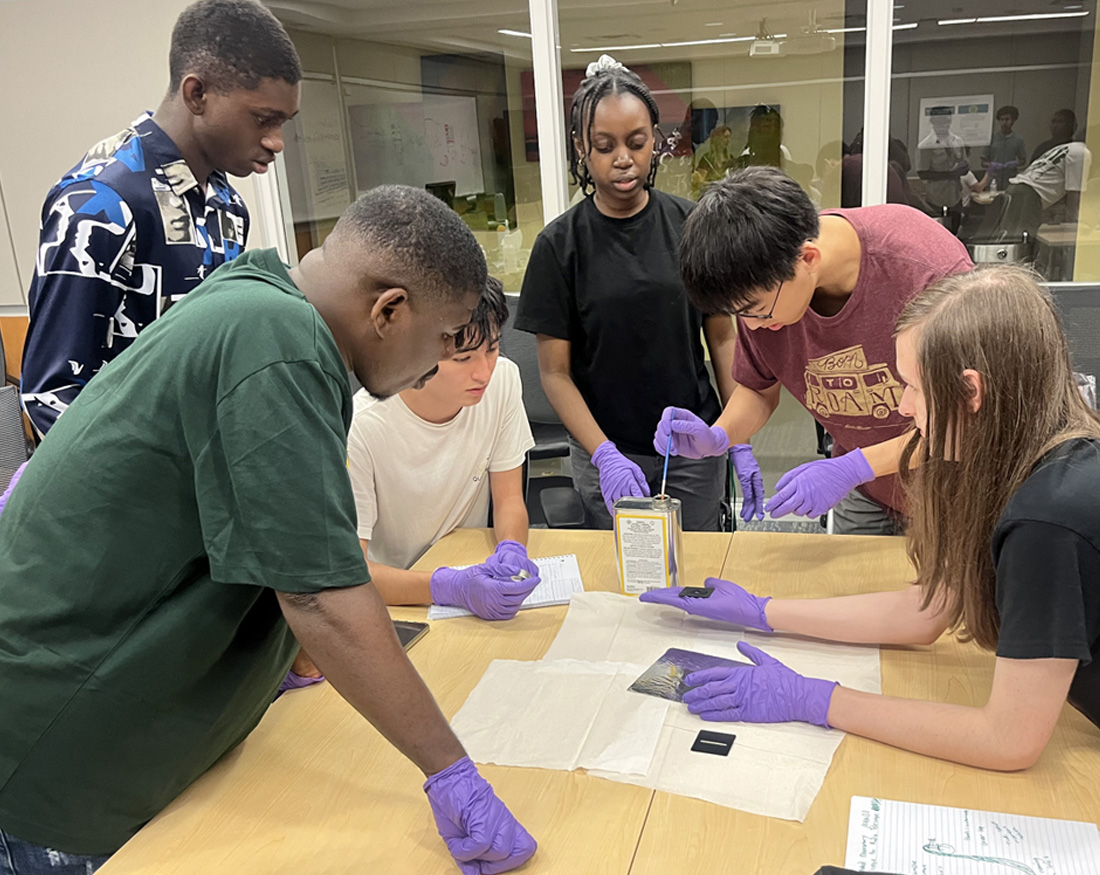
About PING
At PING, students present their work at key national conferences.
PING offers two distinct experiences:
- Nuclear Physics Experience: This two-week summer program at FRIB in East Lansing, Michigan, provides exposure to basic and applied nuclear physics, with the option to extend into a year-long research opportunity. Established in 2019 and fully funded by the National Science Foundation since 2020, participants present their research annually at national professional conferences while collaborating with the MoNA Collaboration.
- Radio-Astronomy Program: This two-week summer experience through the Physicists Inspiring the Next Generation (PING): Investigating the Cosmos at the Green Bank Observatory in West Virginia focuses on radio astronomy. Participants present their work at a national professional conference, the National Astronomy Consortium meeting, and the American Astronomical Society.
Why sign up?
- Dive into college-level research
- Explore different majors
- Clarify your education goals
- Shape your career plan
- Build lasting connections
- Boost your time-management skills
- Discover agriculture's role in physics
- Enhance your presentation abilities
- Tour the Facility for Rare Isotope Beams
- Join in on a talent show
2026 PING program
PING 2026 will be held 12-25 July 2026. The 2026 application opens on 15 January 2026, and the deadline to apply is 15 March 2026.
Learn more about past PING programs here.

Learn more about PING
Please email us for questions or more information regarding PING.

