MSU Cryogenic Initiative Student Testimonials Archive
MSU Cryogenic Initiative
An archive of past MSU Cryogenic Initiative student testimonials.
The MSU Cryogenic Initiative combines classroom education with training on cutting-edge technologies and advancements in the cryogenic field that exist and are being implemented at FRIB.
Below are testimonials from some of the program’s past students.
Thesis defense date: 15 October 2024
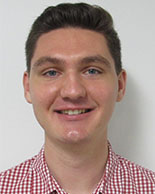
Duncan Kroll is a PhD student pursuing a degree in mechanical engineering at Michigan State University. His advisors are Abraham Engeda, a professor of mechanical engineering from the MSU College of Engineering, and Nusair Hasan, senior cryogenics engineer at FRIB. For his research, he is attempting to characterize the deposition of frost onto heat exchanger surfaces from helium. Duncan joined the MSU Cryogenic Initiative in fall 2018, earned his Master of Science degree in May 2020, and is continuing the program to earn his PhD.
What are your research responsibilities?
My research responsibilities have included process design and optimization of a helium purifier (which I designed mechanically for my master's degree), characterizing frost collection from a stream of air or helium, as well as modeling, measuring, and evaluating data for various aspects regarding the operation of the FRIB. These include partial load operation of turbines and compressors, purifier water and air capacity, and purifier liquid nitrogen and helium usage.
How do you think participating in the MSU Cryogenic Initiative will benefit your career?
It will give me the opportunity to make a lot of connections and work at a world-class facility. My initial interest came from funding opportunities for master’s students at FRIB and a referral from a mentor, but I have been interested in accelerator science ever since I toured NSCL with my high-school chemistry class.
Would you recommend this program to other students?
I would recommend this program to other students. It is an opportunity to work at a world class facility, on important projects, with very knowledgeable people. As a resume builder, that’s about as good as it gets.
Thesis defense date: 18 April 2023
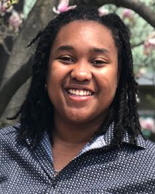 Tasha L. Williams is pursuing a PhD in mechanical engineering at Michigan State University. She is from Melbourne, Florida. Tasha is being advised by Professor of Engineering Abraham Engeda, and FRIB Senior Cryogenic Process Engineer Peter Knudsen. She is researching the improvement and efficiency of rotary screw compressors. She became interested in MSU Cryogenic Initiative when she heard about so many others excelling in her field while studying there. Tasha joined the MSU Cryogenic Initiative in fall 2017.
What are your research responsibilities?
My research responsibilities include attempting to characterize and better understand the helium compression process in a rotary screw compressor that uses oil for cooling. In particular, I research the nature of the helium-oil thermal equilibrium (or non-equilibrium), and how that influences the effective polytropic coefficient for the compression process.
How do you think participating in the MSU Cryogenic Initiative will benefit for your career?
I think it will help catapult me and put me in connection with the right people while also preparing to fill the role.
Thesis defense date: 21 March 2024
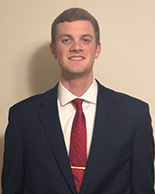 Jonathon Howard is a PhD student advised by Professor of Engineering Abraham Engeda and FRIB Senior Cryogenics Engineer Nusair Hasan. He is researching cryogenic turbomachinery. Jonathon joined the program in spring 2019.
What are your research responsibilities?
My current research involves the development of a compressor impeller design and performance prediction code. The goal of this research is to create a robust code that can be utilized in the design of compressors found in sub-atmosphere cryogenic helium systems.
What interested you about the program?
During my undergraduate studies, I was interested in aeronautics/aerospace and found myself looking for opportunities to further my education in a manner that could translate to a position in those fields. My interests made the ASET program very desirable, as I could use the knowledge learned from the cryogenic and turbomachinery departments to achieve my career goals.
How will participating in the program benefit your career?
The ASET program at Michigan State University involves working at a world-class facility that employs many leaders in physics and engineering. The amount of knowledge that can be learned from working at FRIB would have a large impact on anyone who is prepared to learn and willing to work hard. I believe the knowledge and experience that I gain during my time in the ASET program will be very beneficial in the pursuit of my future career.
What career path do you plan to pursue?
The career path that I am most interested in pursuing is working in the aeronautical or aerospace industry. I am also interested in working as a process engineer at a cryogenic or power plant.
Would you recommend the program to other students? Why?
Yes, I would highly recommend the ASET program to other students. It isn’t often that a graduate student would have the opportunity to be involved in the construction of a world-class accelerator facility. Working at FRIB allows insight into the process of creating the entire system involved with the accelerator and would be very valuable to any student interested in going into a career associated with accelerators or accelerator support systems.
Is there anything else you would like to add about your experience with the program?
The integration of the College of Engineering and FRIB has been beneficial, with the addition of classes that introduce engineering students to the technologies utilized at FRIB. I hope to see new engineering students joining the program in the future.

