Graduate student working at FRIB. Find out more

Welcome to FRIB

The Facility for Rare Isotope Beams (FRIB) at Michigan State University (MSU) is a world-class research and training center, hosting the most powerful rare-isotope accelerator. MSU operates FRIB as a user facility for the U.S. Department of Energy Office of Science (DOE-SC), with financial support from and furthering the mission of the DOE-SC Office of Nuclear Physics. FRIB is where researchers come together to make discoveries that change the world. They study the properties and fundamental interactions of rare isotopes and nuclear astrophysics and their impact on medicine, homeland security, and industry.

Research areas

FRIB advances nuclear science by improving our understanding of nuclei and their role in the universe, while also advancing accelerator systems.

Explore FRIB research areas

Capabilities

In establishing and operating FRIB, capabilities were developed that transfer to other industries and applications.

Explore FRIB capabilities
View all news
Artificial intelligence/machine learning graphic
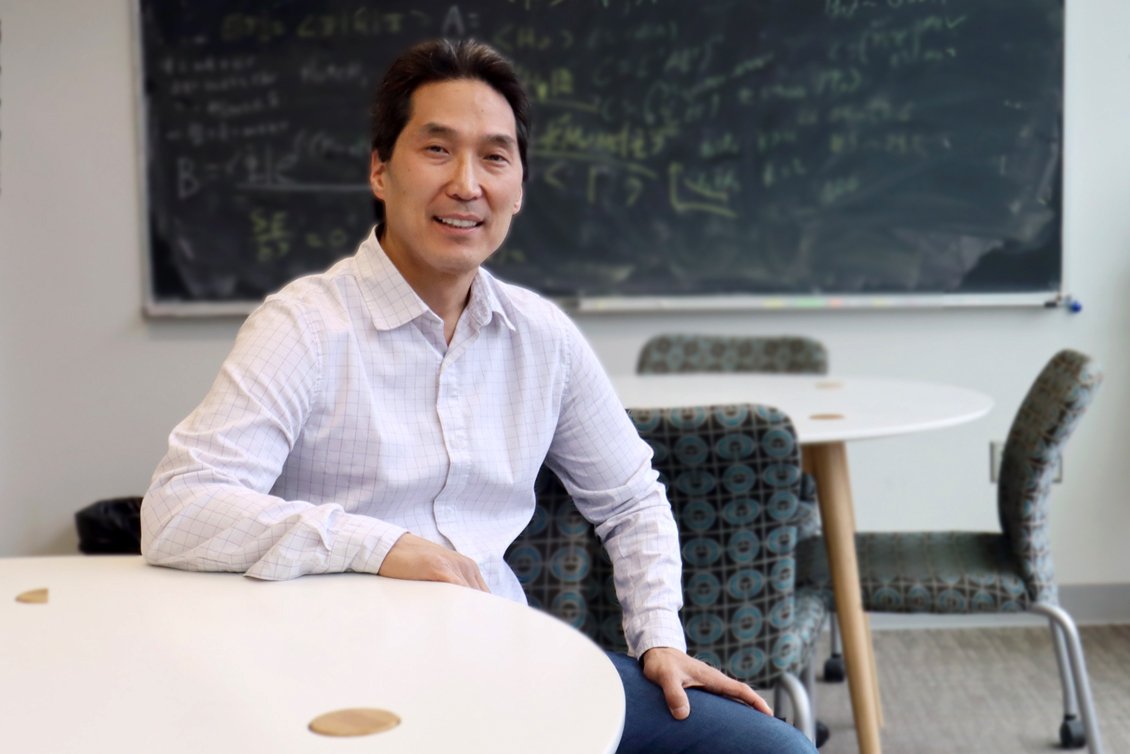
A graphic showing surrogate models for linear responses Photo of Dean Lee sitting at a desk in a classroom setting

User facilities

FRIB hosts the world’s most powerful heavy-ion accelerator and enables discoveries in rare isotopes, nuclear astrophysics, fundamental interactions, and societal applications like medicine, security, and industry.

Explore FRIB user facilities

Learn more about upcoming events taking place at FRIB. 

View all events
  • 7 April 2026
  • 11:00 EDT
Mean-field approximation on steroids: exact description of the deuteron In this talk, we will demonstrate that the deuteron, i.e., the lightest bound nuclear system made of a single proton and a single neutron, can be accurately described within a mean-field-based framework. Although paradoxical at first glance, we will show that the deuteron ground-state binding energy, magnetic dipole moment, electric quadrupole moment, and root-mean-square proton radius can indeed be reproduced with sub-percent accuracy via a low-dimensional linear combination of non-orthogonal Bogoliubov states, i.e., with a method whose numerical cost scales as n^4, where n is the dimension of the basis of the one-body Hilbert space. By further putting the system into a harmonic trap, the neutron-proton scattering length and effective range in the 3S1 channel are also accurately reproduced. To achieve this task, (i) the inclusion of proton-neutron pairing through the mixing of proton and neutron single-particle states in the Bogoliubov transformation and (ii) the restoration of proton and neutron numbers before variation are shown to be mandatory ingredients. This unexpected result has implications regarding the most efficient way to capture necessary correlations as a function of nuclear mass in ab initio frameworks based on modern chiral interactions. In particular, this work illustrates the power of the symmetry-breaking and -restoration techniques, which have been traditionally employed within the context of energy density functional calculations but also gained popularity in ab initio methods in recent years.
  • 8 April 2026
  • 3:30 EDT
Neutron Lifetime Experiments with Cold Neutron Beams at NIST Neutron beta decay is the simplest example of nuclear beta decay and is crucial in our understanding of weak processes. The neutron lifetime, when combined with other neutron decay parameters, provides a test of the unitarity of the CKM matrix in the Standard Model; is an important input in Big Bang Nucleosynthesis models; and plays a role in other areas including solar physics and the detection of reactor antineutrinos. Competitive tests of unitarity in the CKM matrix require determination of the neutron lifetime to less than 0.3 s. While the most precise neutron lifetime experiment, using ultracold neutrons in a magnetic trap, has reached an uncertainty of 0.3 s, the current 10 s discrepancy between bottle and beam-based determinations presents a challenge, but also a possibility for new physics. In this talk I will give an overview of neutron lifetime experiments and the current state of the field as well as discuss our efforts to address the beam-bottle discrepancy through systematic studies and improved beam measurements. I will discuss both the ongoing BL2 beam neutron lifetime experiment and the next-generation beam lifetime experiment, BL3, currently undergoing assembly and off-line testing. The goal of BL3 is to achieve 0.3 s uncertainty in the neutron lifetime utilizing the beam method.
  • 8 April 2026
  • 7:00 EDT
MSUFCU Arts Power Up Artists in Residence in Conversation MSUFCU Arts Power Up artists-in-residence Carl Craig and Cecilie Waagner Falkenstrom come together for a conversation exploring art, technology, and creative practice. Moderated by Sophia Saliby of WKAR, the discussion offers insight into how artists working across disciplines imagine and shape the future. April 8, 2026. 7:00 to 8:00 PM MSU Broad Art Museum (547 East Circle Drive, East Lansing, MI, 48824) Registration: https://50807.blackbaudhosting.com/50807/ARTIST-TALKS-MSUFCU-Arts-Power-Up-Residency https://50807.blackbaudhosting.com/50807/ARTIST-TALKS-MSUFCU-Arts-Power-Up-Resi…
Training the next generation

Education & training

FRIB at MSU is a world-class research and training center where students and researchers from all career stages and backgrounds come together to make discoveries that change the world.

Explore FRIB training

External news and journal publications discussing FRIB.

View all articles
  • 4 March 2026
  • Lansing State Journal

Michigan State University's K500 Chip Testing Facility, inaugurated in February at FRIB, cost approximately $14 million to establish, with funding provided by the U.S. Department of Defense. The project repurposed the campus' K500 superconducting cyclotron, completed in 1982 for high-energy, heavy-ion research, including producing and accelerating ion beams to study nuclear structure, to now allow the facility to test semiconductors for space, defense and on-Earth applications.

https://www.lansingstatejournal.com/story/news/local/campus/2026/03/04/msu-micr…
  • 22 January 2026
  • Phys.org

Researchers have reported new experimental results addressing the origin of rare proton-rich isotopes heavier than iron, called p-nuclei. Led by Artemis Tsantiri, then-graduate student at FRIB and current postdoctoral fellow at the University of Regina in Canada, the study presents the first rare isotope beam measurement of proton capture on arsenic-73 to produce selenium-74, providing new constraints on how the lightest p-nucleus is formed and destroyed in the cosmos.

https://phys.org/news/2026-01-cosmic-rare-proton-rich-isotope.html
  • 26 March 2025
  • Lansing State Journal

One of the nation's premier research facilities located at Michigan State University is getting a multi-million dollar upgrade. Late last month, the U.S. Department of Energy Office of Science approved $49.7 million for MSU's Facility for Rare Isotope Beams.

https://www.lansingstatejournal.com/story/news/local/campus/2025/03/26/msu-frib…