FRIB Single Event Effects Facility
Heavy-Ion Facilities
To book time, contact the SEE User Manager.
Utilizing FRIB's state-of-the-art linear accelerator, the FRIB Single Event Effects Facility (FSEE) lets users fulfill a wide range of experimental needs. Select beam species offering unique timing structures allow for high intensity pulsed beam to be delivered to user targets. Contact the SEE User Manager for general information or questions.
Beam list
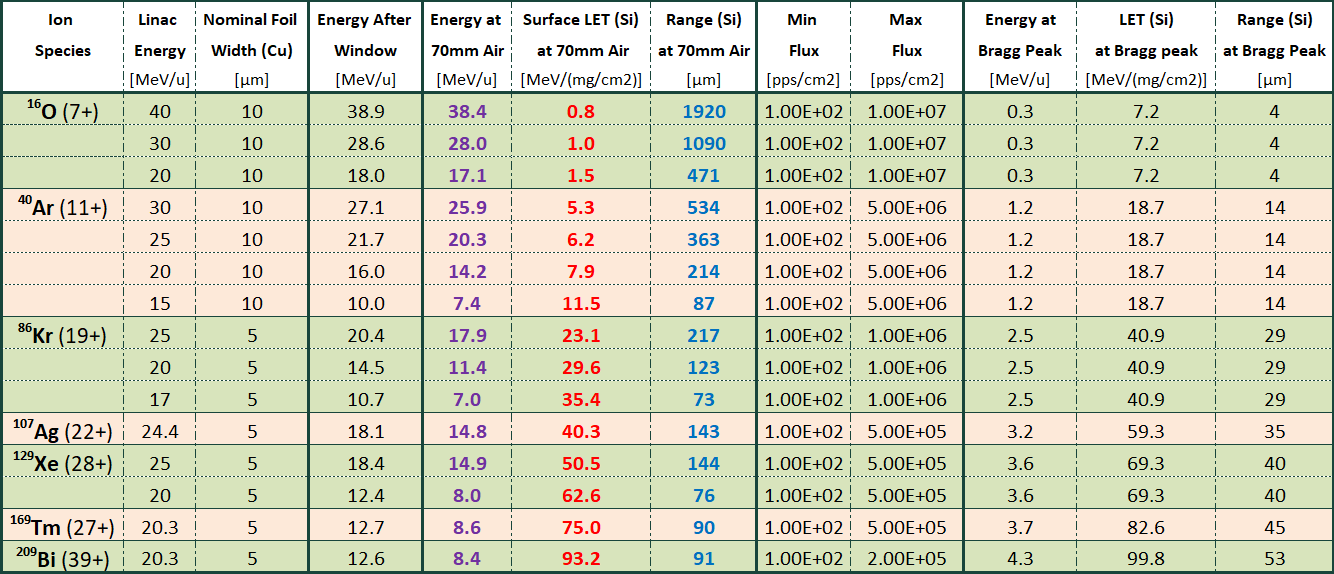
FSEE available beam list (updated August 2025)
SEE Test Planner
The FRIB SEE Test Planner provides estimated energy, LET, and range values to assist users with SEE testing at FRIB.
Calendar of availability
| FSEE Available Dates | Available Times |
|---|---|
| September 2026 | Maintenance shutdown |
| October 2026 | No more available times |
| November 2026 | 14 November - 19 November, 8 a.m. - midnight |
| December 2026 | 20 December - 22 December, 8 a.m. - midnight |
Additional SEE availability may be found at our KSEE facility.
Booking
To initiate a booking request, please contact the SEE User Manager.
Beam generation and delivery
Beams are initially generated in the FRIB ion sources and then accelerated before delivery to the SEE experimental areas. Highly charged ions are produced with an electron cyclotron resonance (ECR) ion source. Beam species are selected in the injector beamline by mass-to-charge (M/Q) ratio for further transport and delivery. Beam species with non-overlapping mass-to-charge values are selected to ensure elemental purity and delivery of single LET values to devices.
Beam uniformity and homogeneity
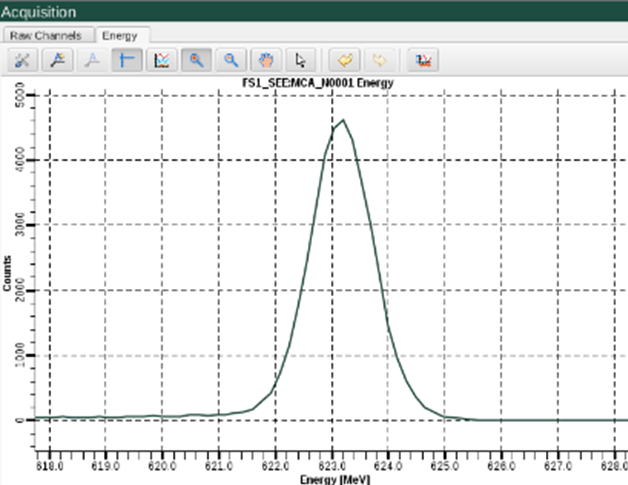
Beams are attenuated to provide uniform fluence over a maximum spot area of approximately 20 x 20mm2 at the target device location. Smaller spots down to 1 x 1mm2 can be produced on request. Inhomogeneity of the beam distribution is typically <10%. Beam purity is determined by a 5mm thick Si (Li) detector, pre-amplifier, shaper, and multi-channel analyzer (MCA), which provides a spectrum of intercepted beam energy. Contaminant species are evident as additional peaks.
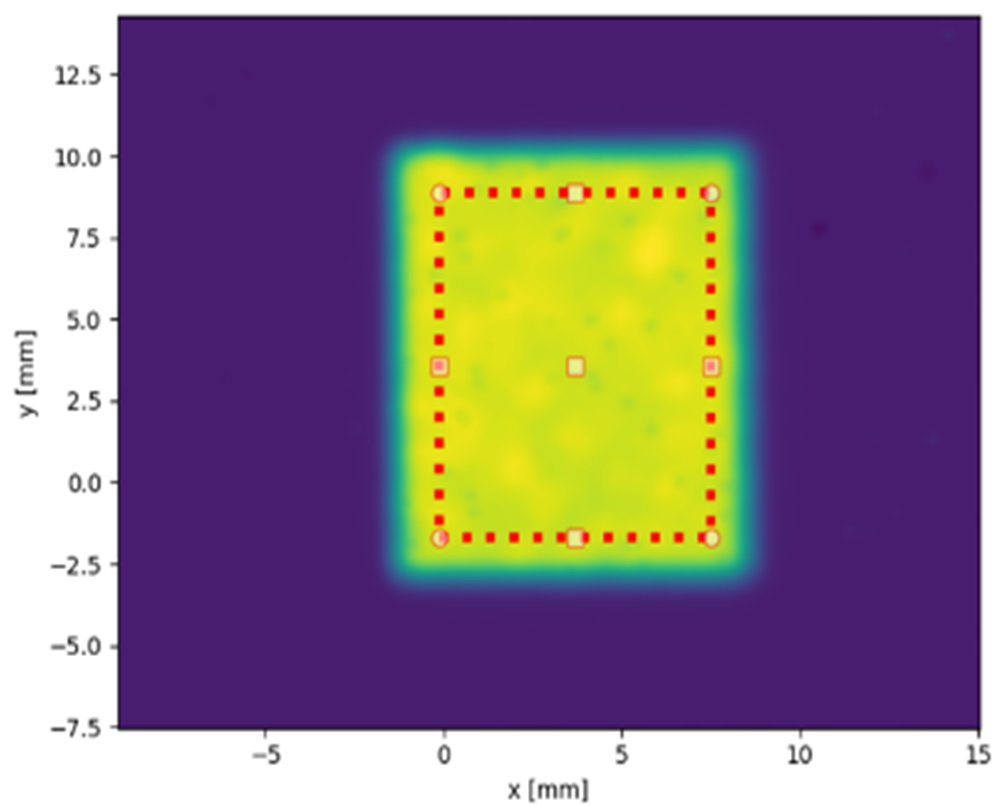
Figure 1 Uniform Beam
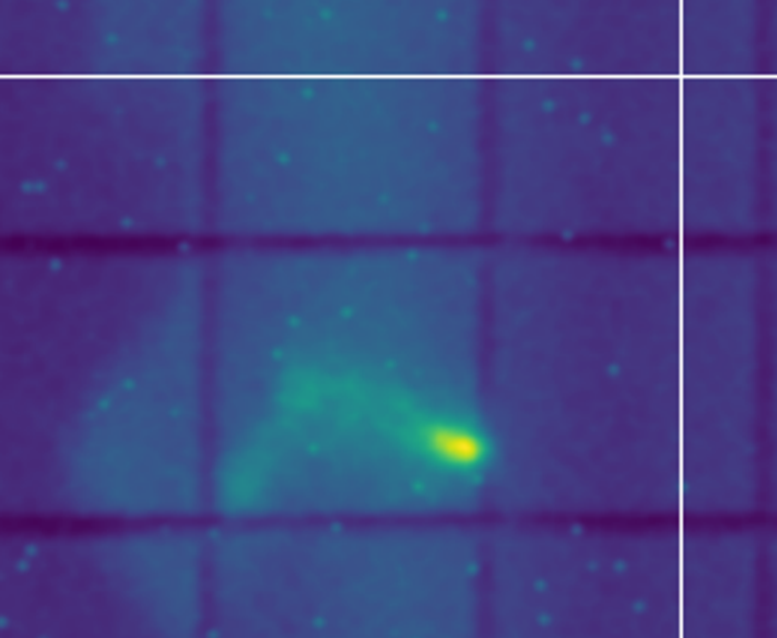
Figure 2 Small Beam - Flux >1E10 pps/cm2, pulsed
Acquisition
Beam format
In nominal operation, the beam is provided continuously with a 99.5% duty factor, 100Hz repetition rate, and a 9.95ms pulse duration (0.05 ms gap every 10ms). For efficient acceleration in the RF linear accelerator the beam carries a 40.25MHz bunch structure.
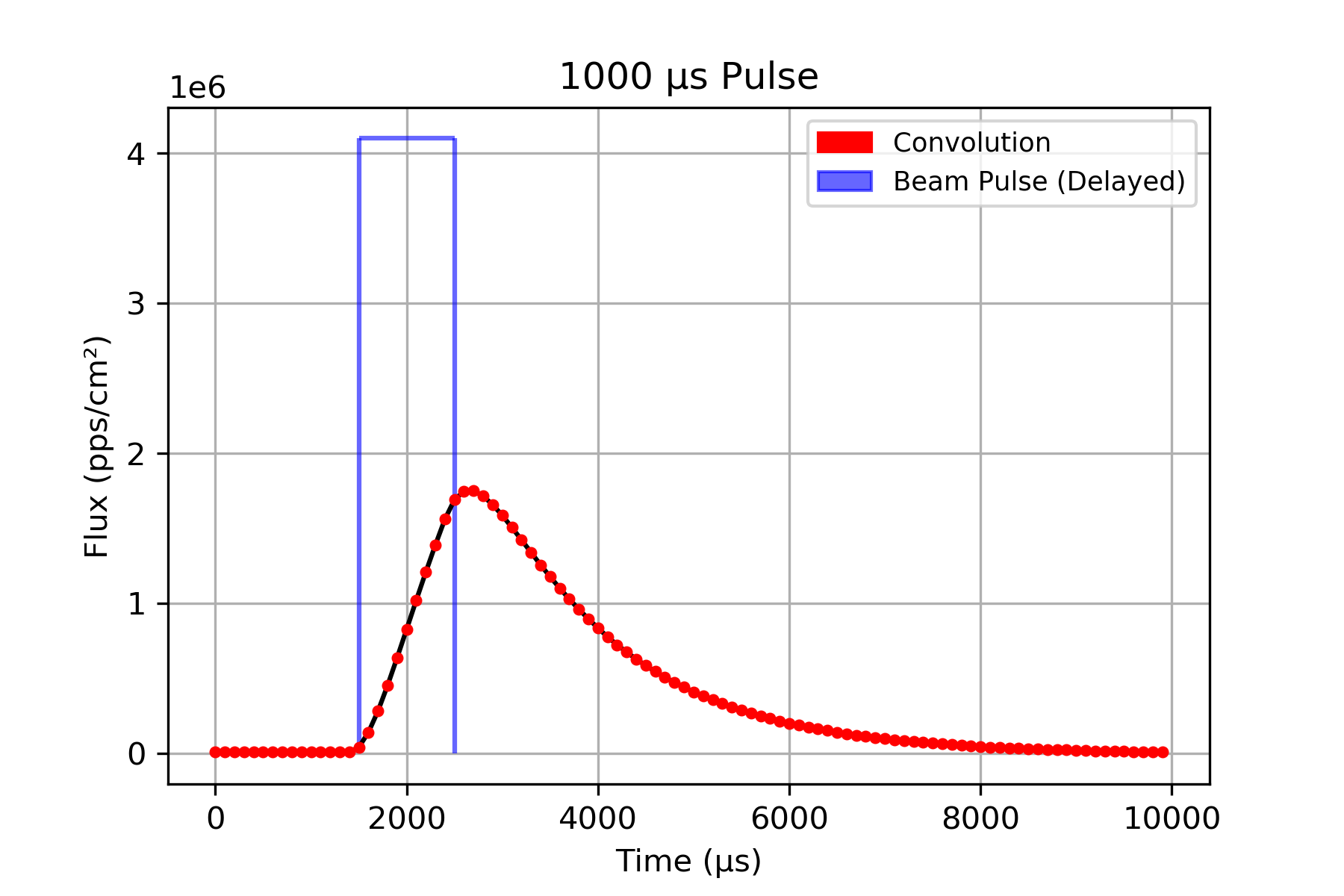
FSEE also offers single pulse beam format, delivering high intensity beam to DUTs with pulse durations ranging from 10 ms to 1 µs. Beam pulses can support flux ranges up to 1012 particles/sec/cm2 for light ions. Dosimetry measurements are performed with sensitive picoammeters that incorporate a ~120-Hz input bandwidth, but conserve overall charge for an accurate measurement of single-pulse fluence. Single pulses may be chained together at repetition rates of 1, 5, 10, 25, and 100 Hz, being delivered until a desired total fluence is met or a determined number of pulses have been completed.
Energy degradation
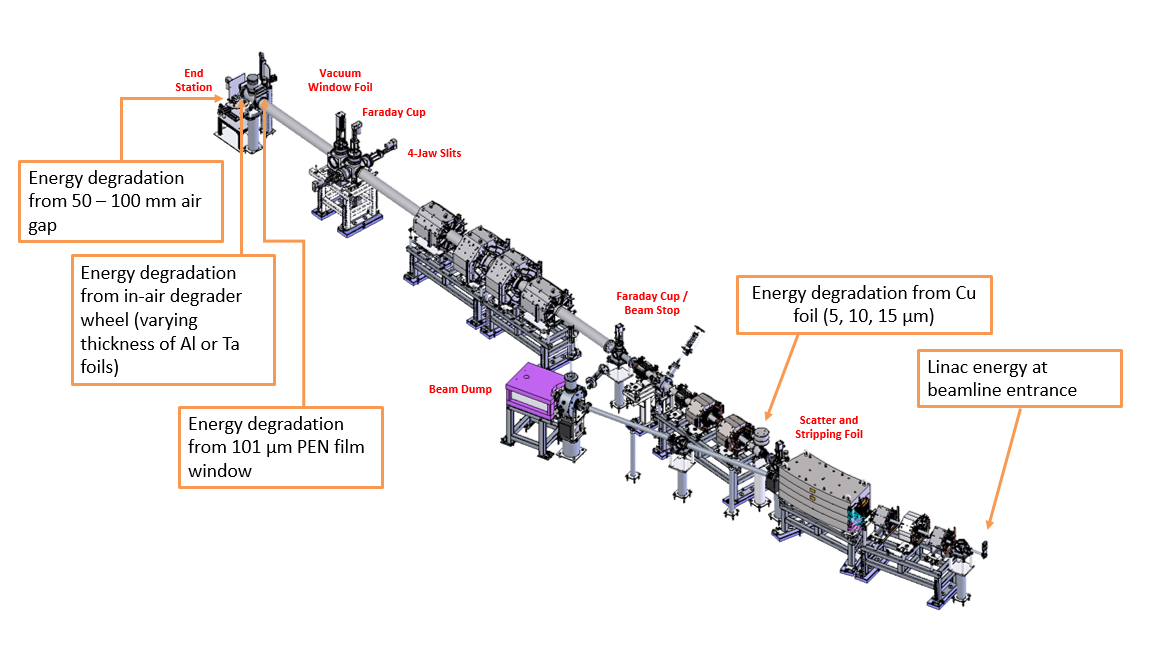
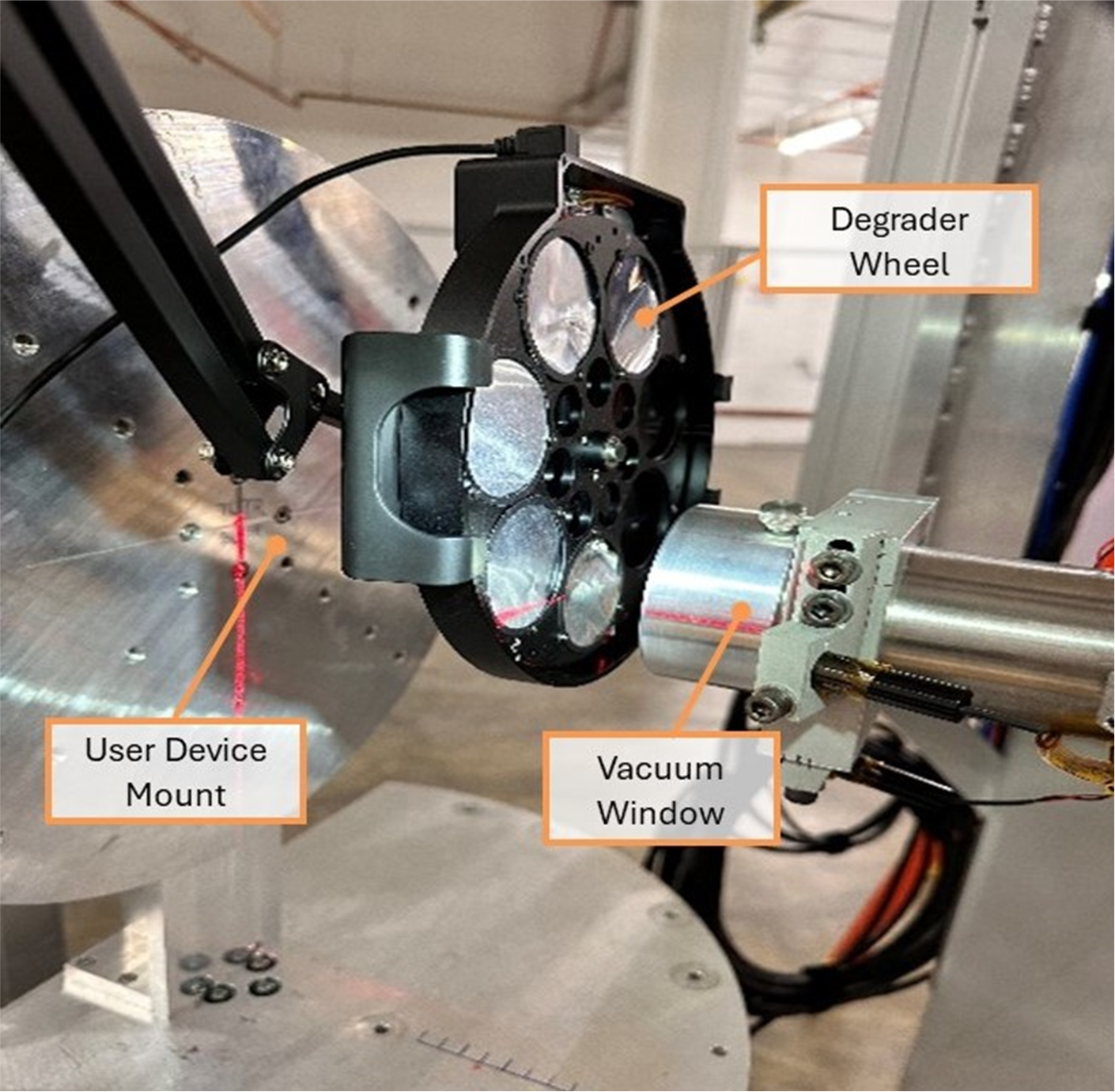 Energy degradation is achieved through both facility-provided and user-controlled methods. Facility-based energy degradation is configured via beam tuning parameters and includes copper foils of 5, 10, and 15 μm thickness, along with the 4 mil polyethylene naphthalate (PEN) vacuum window.
User-controlled degradation options include a variable air gap (30–100 mm) and a remotely operated degrader wheel at the end of the FSEE beamline. The degrader wheel is typically loaded with several aluminum foils of varying thicknesses; however, users may supply custom degrading materials if desired.
Below is a diagram of the FSEE beamline outlining the energy degradation points.
Exposure selection and control
Beam species, energy, and flux changes are conducted by FRIB operators at the request of users. Users are given control of a beam shutter to manage beam exposure time. Various beam exposure settings are offered including maximum fluence, run time, and maximum dose. Exposure settings can be set by users from the SEE user control room at any time during exposure runs. A timing signal synchronized with beam on/off is available both in the experimental area and the user control room. The signal is generated in VLTTL format, with BEAM_OFF = 0V and BEAM_ON = +3.3V when terminated to high impedance, or +1.7V when terminated with 50 Ω.
Beam dosimetry and reporting
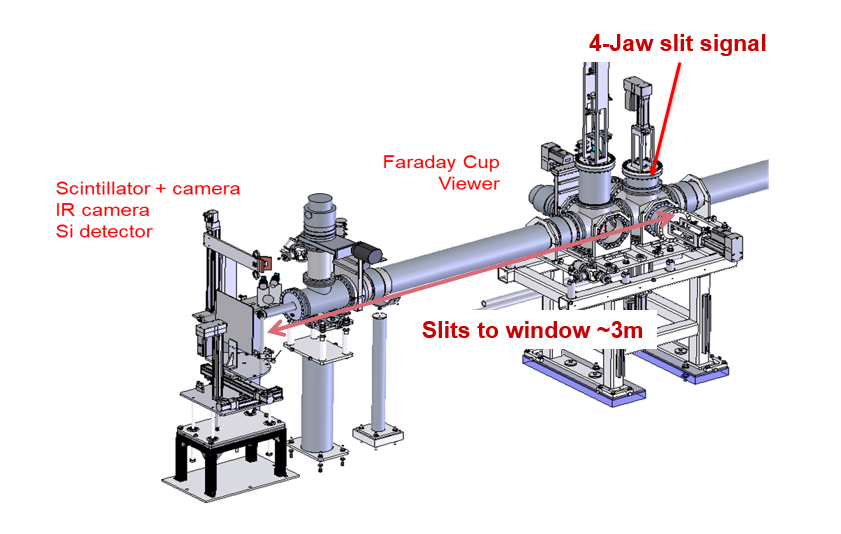
Various beam parameters are monitored during exposure. Ion species and charge states are initially known from the ion source and charge selector upstream of the SEE beamline. Flux density is determined by multiple points. A Faraday cup and viewer is used to establish the upstream flux density, and a scintillator establishes the flux density at the target.
Energy, energy spread, and beam purity are measured. Beam energy is established using linac instrumentation and ToF measurements. Intensity and flux stability monitors are provided by the 4-Jaw slit current readback into sensitive picoammeters.
Real time dosimetry monitoring and reporting is provided to users. Dosimetry reporting collects individual exposure runs into "batches." Batch reports are emailed to the user point-of-contact person on demand. Reports may be generated singly, or in batches to reduce instances of email. Reports are generated in txt and MATLAB-compatible formats and are provided on demand when reports are generated. All data is archived and time stamped.
FSEE beamline dosimetry
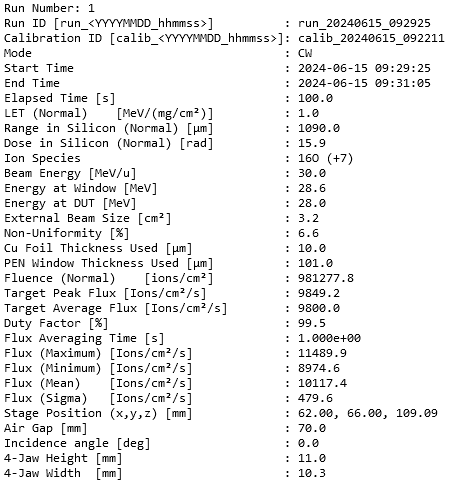
Example of a typical SEE run report
Experimental area
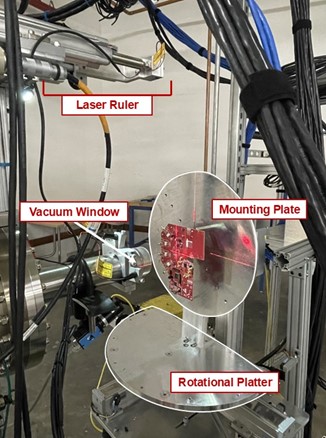 The experimental area is located at the end of the FSEE beamline. The area allows space for user equipment, workbenches, and supplies local AC power (120V, 15A), with additional wall power configurations available upon request. Remotely controlled power is also available. Grounding points and ESD mats are positioned throughout the experimental area.
User devices are mounted to one of several available mounting boards (see Downloads for board patterns). The mounting board will be prepositioned to ensure easy access and adequate clearance from the beam exit window (vacuum window). Lightweight devices may be positioned on the rotational stage to support instrumentation or testing. An air powered heating element is also available.
The mounting platform accommodates devices up to 15 inches x 15 inches, and the device stand supports Texas A&M University (TAMU) and Lawrence Berkeley National Laboratory (LBNL) mounting hole patterns. Devices can be positioned between 30 – 100 mm from the beam window. The stage allows ±7.5 inches of horizontal and vertical movement and supports rotation in yaw up to 45°. The position of the holder is known to be within 100 μm, and its rotational orientation is accurate to within 1°. The mounting plate is 3/8” thick and is supported with four #10-24 x ½” mounting screws for attachment to the vertical stand. The platter supports a maximum load of 30 lbs. Larger apparatus can be used with prior discussion and planning. Users may attach their own mounting board if desired.
Two line laser elements are provided to assist with aligning elements to the beam axis. A third laser is also available to measure air gap distances and to calibrate the position of user DUTs. All lasers are remotely powered by user inputs. Touchscreen controls are provided for users at the beamline and the user control room to facilitate positioning and transition between separately mounted devices.
Get in touch
Contact SEE staff to discuss special beam format requests.
User control room
Industrial-standard touch-panel-based controls provide users with comprehensive control over device presentation, exposure shutter state, and run statistics.
The control interface is available both in the user control room and the experimental area and is used to manage device motion and positioning. A system status monitor, which provides real time updates on the accelerator, beamline, and flux monitoring, is also included in the control room. Visible and infrared cameras monitor the user stage and provide visual feedback during stage motion. The status monitor also includes online flux and fluence monitoring.
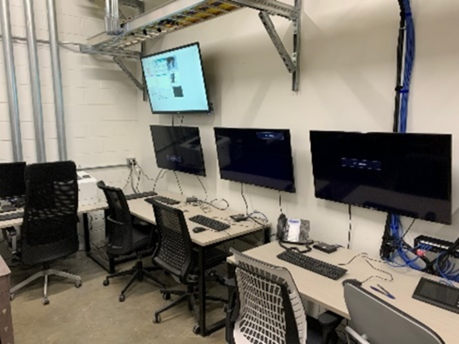
Amenities
The FSEE user control room contains various conveniences to assist users throughout their shift including:
- Multichannel bench top power supplies
- Soldering station
- Digital microscope
- 4-Channel, 200-MHz oscilloscope
- Assortment of hand tools, cables, connectors/adaptors
- Wi-Fi and Internet
- Refrigerator, microwave, and coffee machine
- Grounding points and ESD mats
KSEE details
View KSEE beam list and specifications, availability, and booking information.
SEE downloads
View current downloadable files relevant to the SEE Facilities.

