FRIB Capability
FRIB’s single event effects (SEE) facilities use high-energy, penetrating heavy-ion beams to simulate the effects of cosmic radiation on electronics, replicating decades of exposure in just minutes.
FRIB’s facilities, including the FRIB Single Event Effects Facility (FSEE) and K500 Chip Testing Facility (KSEE), are essential in addressing the national shortage of testing capacity for advanced microelectronics used in industries like spaceflight, wireless technology, and autonomous vehicles.
SEE testing helps identify potential failures or errors in electronic or photonic systems used on Earth, in aircraft, and spacecraft caused by high-energy ion impacts. By conducting tests in air rather than a vacuum, challenges such as cooling and component access are simplified.
For more information or to schedule time, visit the SEE area in the User Facilities section of the website.
FSEE
The FRIB Single Event Effects (FSEE) Facility was established with financial support from the federal government and provides U.S.-based users with heavy ion beams, accurate characterization of beam parameters and linear energy transfers (LETs), easy-to-use controls, and prompt reporting of dosimetry results.
KSEE
The K500 Chip Testing Facility helps address the current national shortage in testing capacity for advanced microelectronics, including those used in commercial spaceflight, wireless technology, and autonomous vehicles, with a dedicated facility.
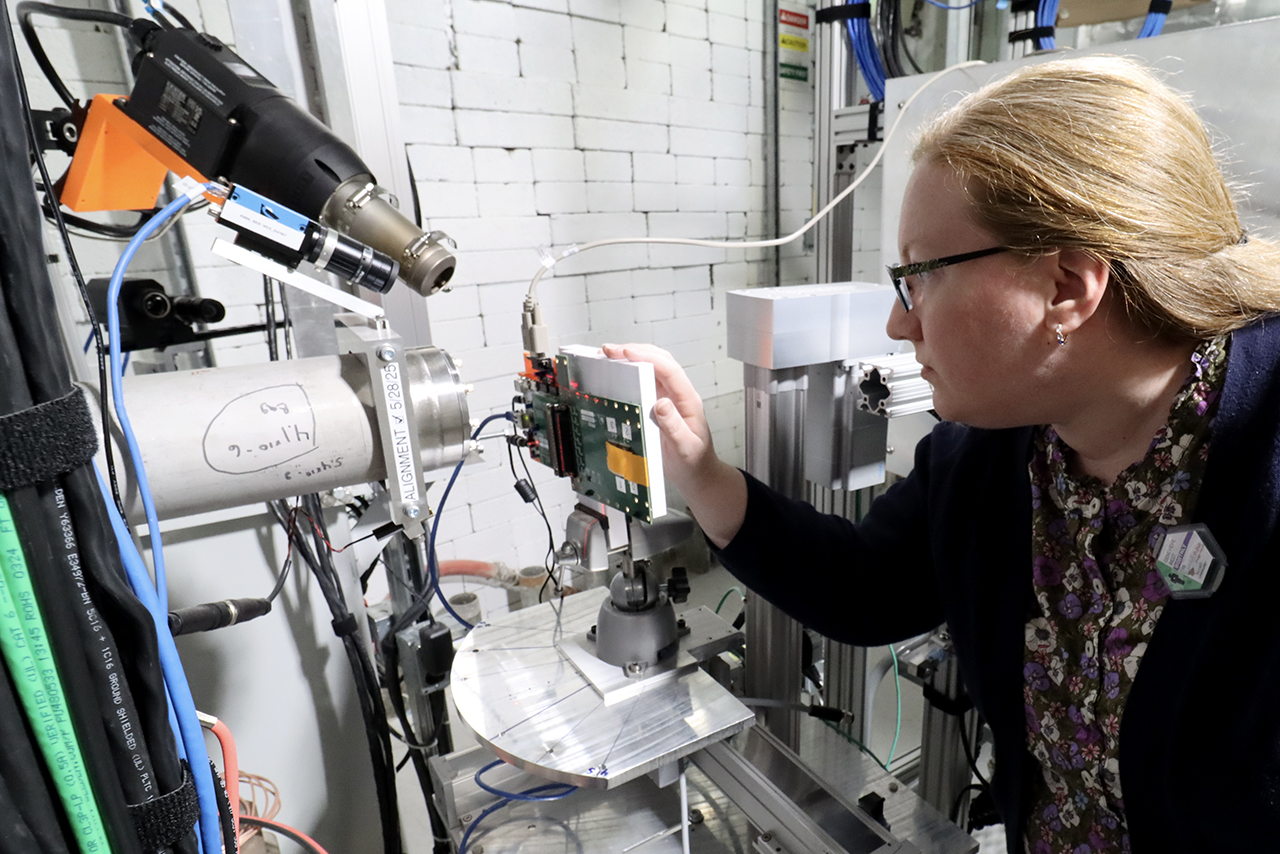
The SEE facility will increase national infrastructure capacity by thousands of hours, enabling users to test advanced microelectronics, including those used in applications such as spaceflight, wireless technology, and autonomous vehicles.
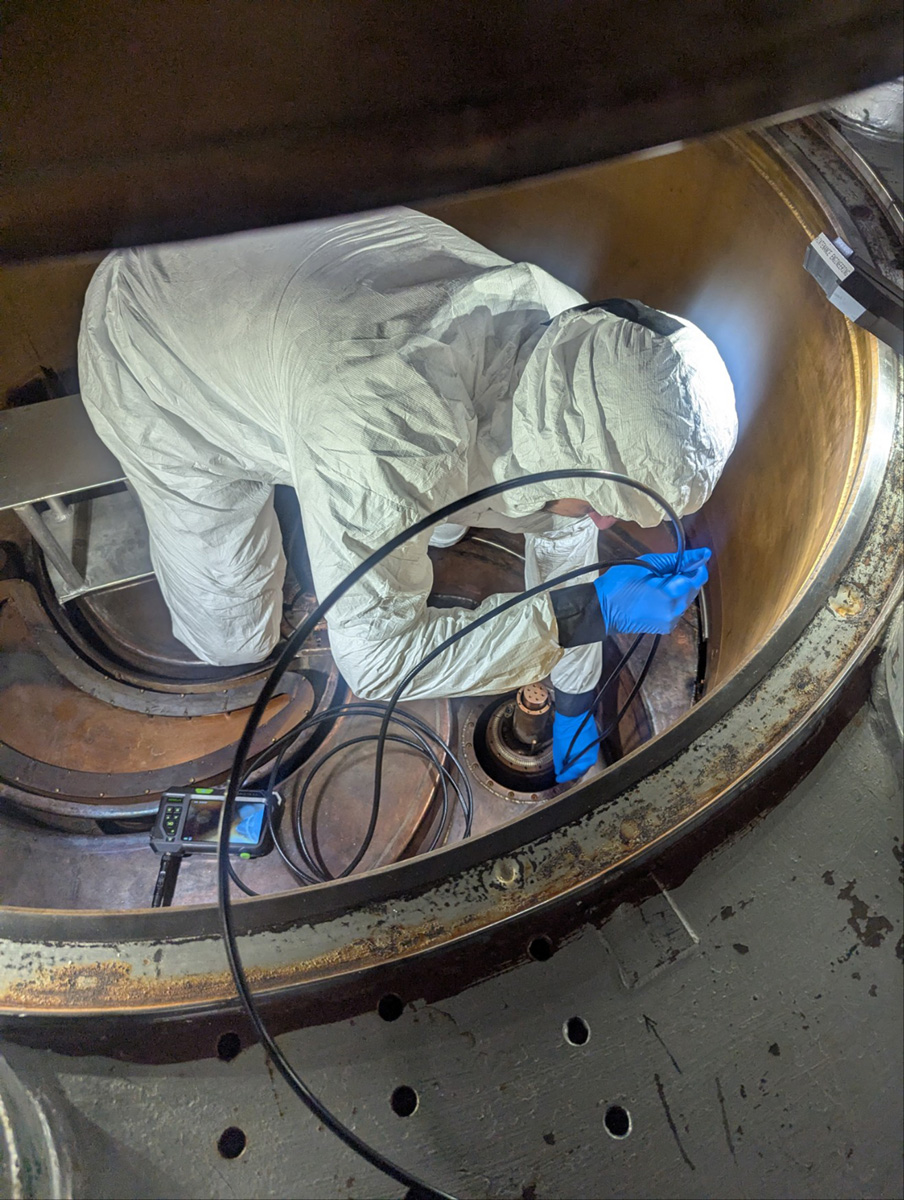
An FRIB engineer works in the beam chamber of the K500 cyclotron as it is repurposed for chip testing.
FRIB’s SEE facility provides thousands of additional chip-testing hours annually, leveraging over six decades of investment by the National Science Foundation at MSU. MSU’s long history of applying accelerator-based nuclear science to new fields continues with FRIB, supporting U.S. competitiveness and addressing industry needs in advanced microelectronics.
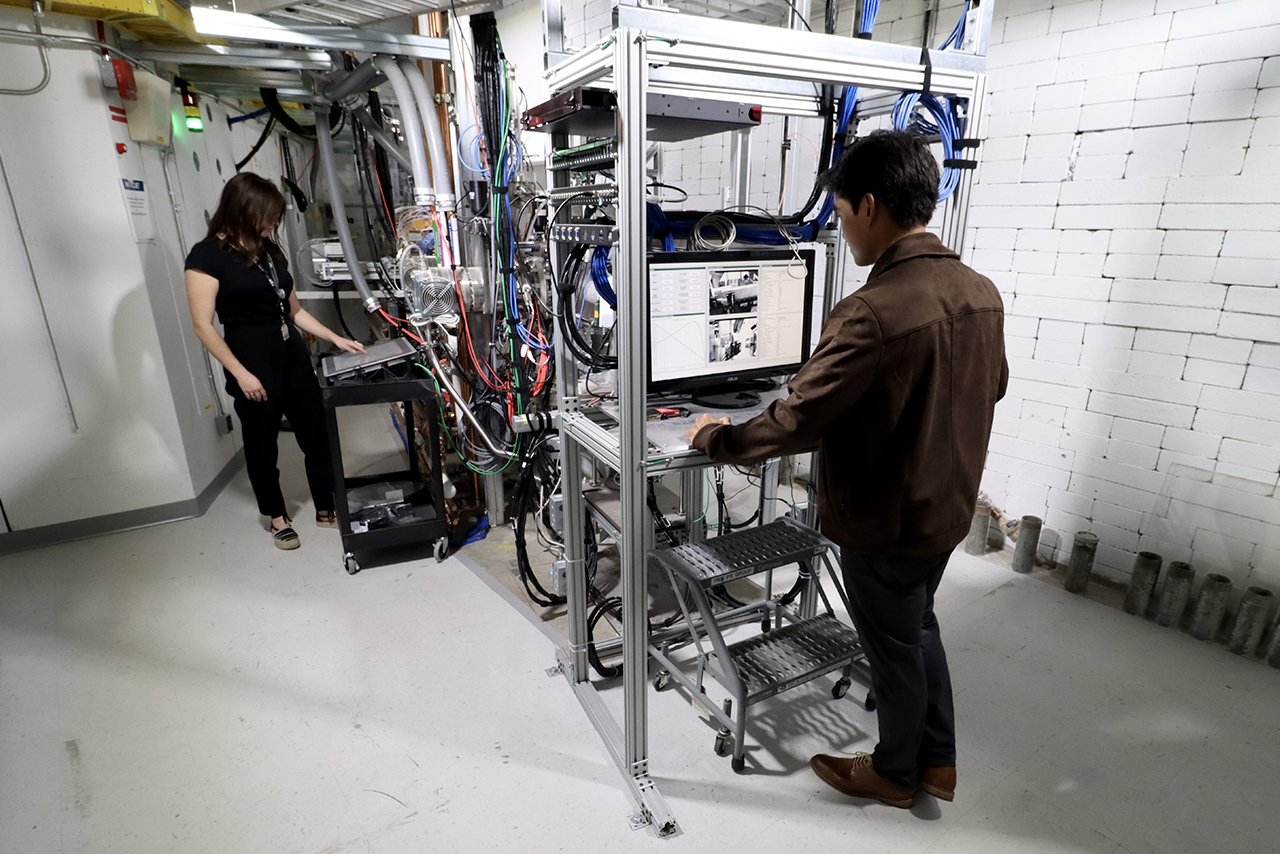
FRIB has completed construction of the K500 Chip Testing Facility (KSEE), along with a new high-bay addition that significantly expands the university’s capacity to test advanced microelectronics.
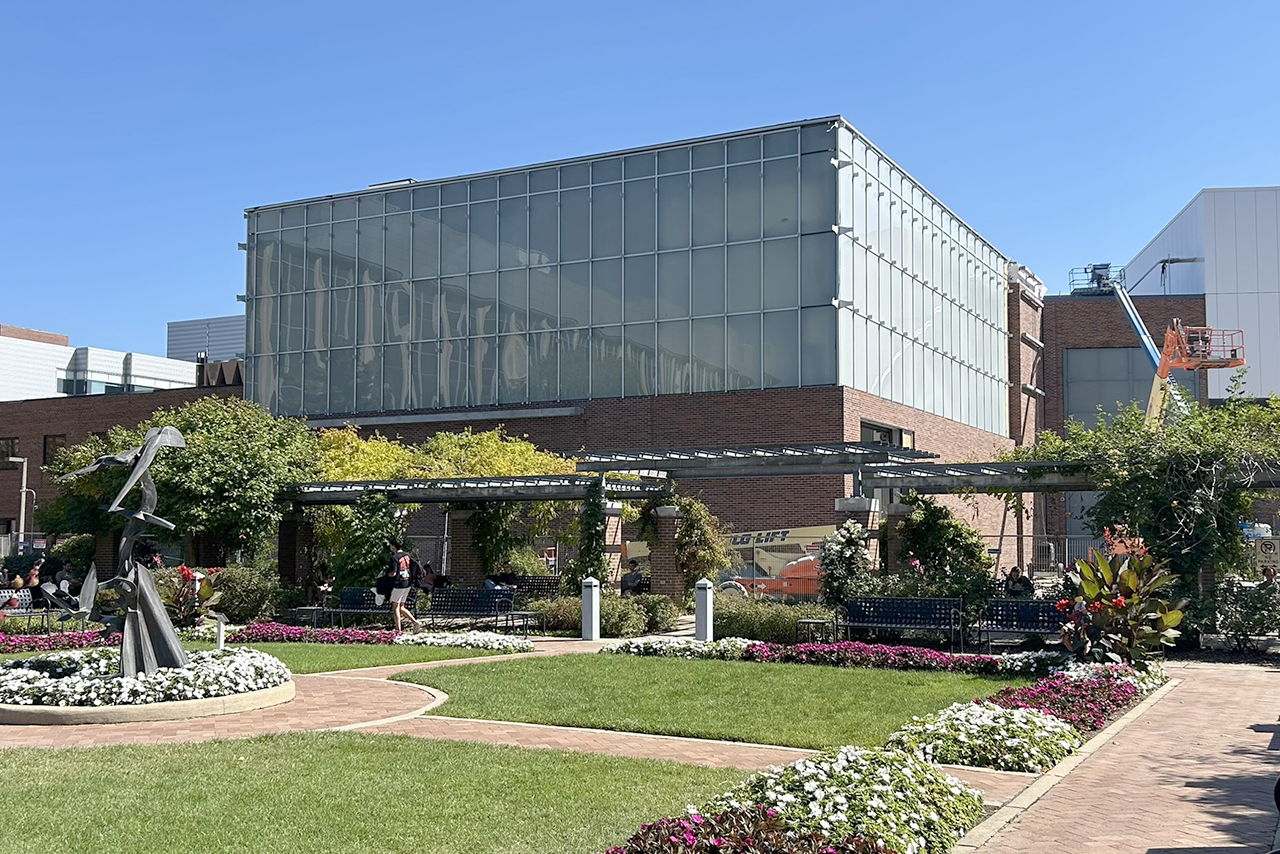
The Michigan State University Board of Trustees authorized construction of a high-bay addition to FRIB. The addition triples FRIB’s chip-testing capacity by providing two additional user vaults.
At FRIB, students receive hands-on training with world-leading experts on world-unique systems, gaining critical skills and real-world experience. This training helps them win prestigious awards and contribute to a skilled workforce, lead in emerging industries, and drive national competitiveness.
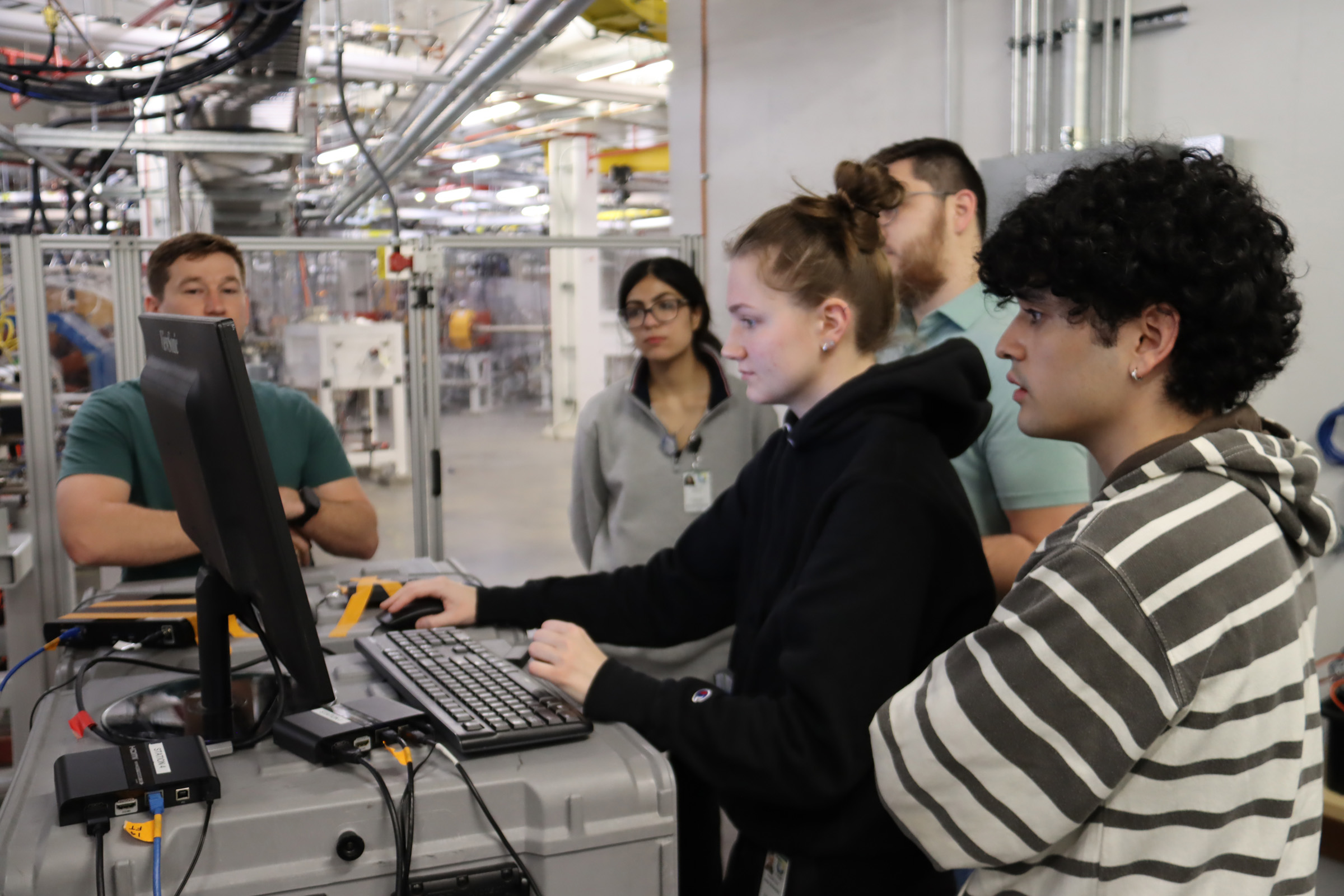
Spartan Engineering students participate in the inaugural Single Event Effects (SEE) Radiation Testing Boot Camp held at the Facility for Rare Isotope Beams (FRIB) at Michigan State University (MSU). Texas Instruments (TI) sponsored the event in partnership with FRIB and the MSU Space Electronics Initiative.

Joined the laboratory in 2016

Michigan State University's K500 Chip Testing Facility, inaugurated in February at FRIB, cost approximately $14 million to establish, with funding provided by the U.S. Department of Defense. The project repurposed the campus' K500 superconducting cyclotron, completed in 1982 for high-energy, heavy-ion research, including producing and accelerating ion beams to study nuclear structure, to now allow the facility to test semiconductors for space, defense and on-Earth applications.
FRIB at Michigan State University opened the K500 Chip Testing Facility, a new national center for testing advanced microelectronics with heavy-ion radiation.
Known as KSEE, the facility will increase U.S. testing capacity by repurposing the world’s first superconducting cyclotron, the K500, which was built at MSU in the 1980s. A newly built high-bay testing area will allow researchers to evaluate microchips for resistance to cosmic-ray damage.
MSU on Thursday marked the inauguration of the K500 Chip Testing Facility — known as KSEE — at FRIB. The project expands U.S. capacity for radiation effects testing on advanced microelectronics, a service in high demand from government agencies, defense contractors and the tech industry.

