Talk details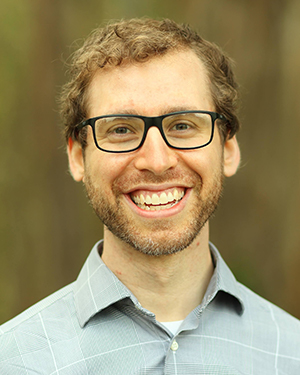
- Date: 26 January 2025
- 1 p.m. (ET)
- Location: Zoom
- Video recording
Talk abstract
From the speaker:
“Particle, nuclear, and astrophysics experiments are producing massive amounts of data to answer fundamental questions about the basic constituents of our universe. While researchers in these areas have been using advanced data science tools for decades, modern machine learning has introduced a paradigm shift whereby data can be directly analyzed holistically without first compressing it into a more manageable and human understandable format. How will the machines help us explore the unknown? Can they be trusted to give us the right answers? I’ll attempt to address these questions and others with a talk about the use of modern machine learning, including generative artificial intelligence (AI), in the study of fundamental interactions.”
Presenter
Benjamin Nachman earned his PhD in physics and a PhD minor in statistics from Stanford University in 2016. He then was a Chamberlain Postdoctoral Fellow in the Physics Division at Lawrence Berkeley National Laboratory (LBNL). In 2020, Nachman became a staff scientist at LBNL, where he leads the Machine Learning for Fundamental Physics Group. This group develops, adapts, and deploys machine learning/artificial intelligence to problems in particle, nuclear, and astrophysics.

