FRIB graduate assistant Brandon Lem earns DOE NNSA fellowship
Share this article:
Share this article:
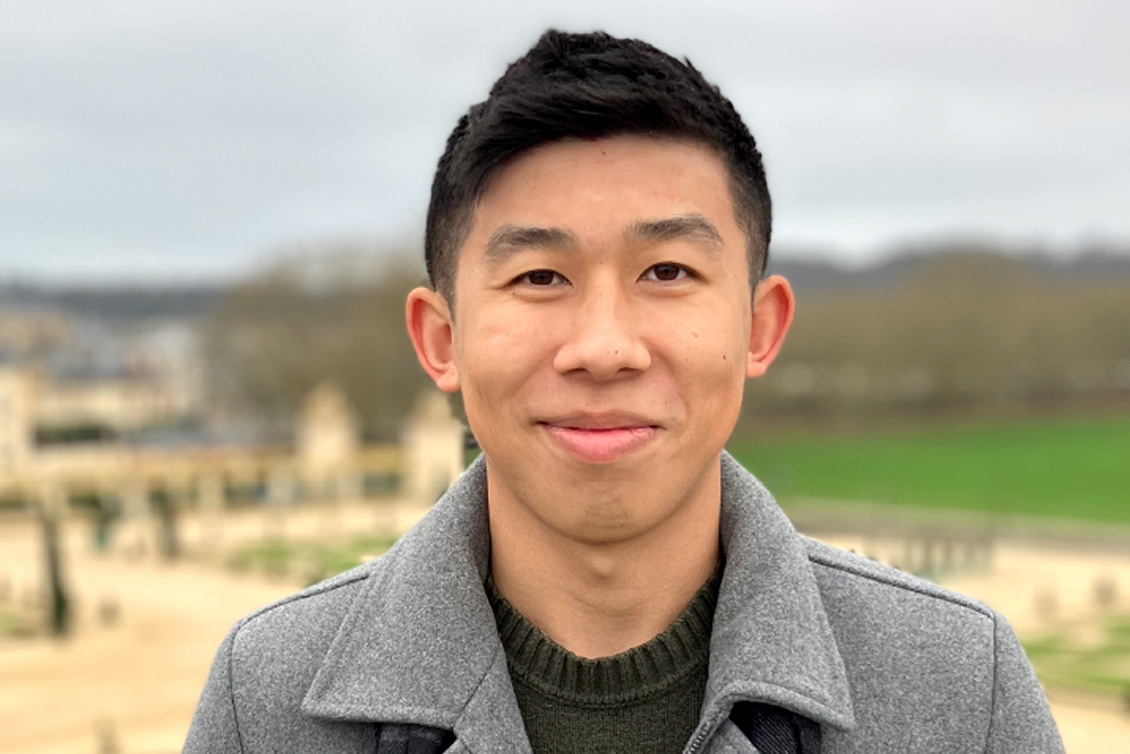
Brandon Lem, graduate assistant at FRIB, has received the U.S Department of Energy Nuclear National Security Administration Stewardship Science Graduate Fellowship for the 2025-2026 academic year.
Established in 2006, the fellowship is a collaboration between the U.S. Department of Energy’s National Nuclear Security Administration and the Krell Institute. It supports doctoral students pursuing research in high energy density physics, nuclear science, and materials under extreme conditions. Lem is one of five national graduate students to receive the fellowship this year.
Fellows receive a yearly stipend plus tuition and fees and an annual academic allowance to conduct a three-month research practicum at one of four DOE national defense laboratories: Lawrence Livermore National Laboratory, Los Alamos National Laboratory or Sandia National Laboratories (California or New Mexico). The program, renewable for up to four years, allows scientists to further their science while advancing national defense.
Lem, originally from Silicon Valley, California, is a second-year graduate student at Michigan State University (MSU) studying theoretical and computational nuclear physics.
“I’m excited to meet the other Stewardship Science Graduate Fellows, especially those studying subjects other than physics, to learn from them and hopefully bring back new insights to theoretical nuclear physics,” Lem said.
Lem works in FRIB’s nuclear theory department with his advisor Scott Bogner, professor of physics at FRIB and in the MSU Department of Physics and Astronomy, and Heiko Hergert, associate professor of physics at FRIB and in the MSU Department of Physics and Astronomy. He has received a College of Natural Sciences Fellowship, a University Fellowship, and an FRIB Graduate Fellowship from MSU and FRIB during his time at MSU.
“Brandon has all the qualities one looks for in a student,” said Bogner. “He’s intelligent, creative, and intrinsically curious about the various aspects of nuclear physics. It’s been a pleasure having him in my research group, and I believe he’ll do a great job as a Stewardship Science Graduate Fellowship recipient.”
At FRIB, Lem focuses his research on quantum many-body methods for nuclei and nuclear matter using a framework known as the in-medium similarity renormalization group (IMSRG). Physicists use the IMSRG to solve the Schrodinger equation, the central equation of quantum mechanics, for many interacting particles.
Through his research, Lem aims to make challenging calculations of heavy nuclei (mass numbers above 100) and nuclear matter more accessible. He said the improvements he seeks will also help constrain nuclear force models like the chiral effective field theory and improve the accuracy of theoretical predictions across the nuclear chart.
“Understanding the structure and stability of heavy nuclei is essential for stockpile stewardship efforts, particularly in the context of international nonproliferation commitments,” Lem said.
Lem plans to continue the research he is conducting at FRIB as a Stewardship Science Graduate Fellow and is excited for the future of IMSRG. Over the next few years, he and his team plan to calculate neutron star matter at non-zero temperatures to better understand their properties and behaviors. He also aims to use his improved IMSRG calculations, together with powerful techniques from machine learning and statistics, to produce calculations of nuclei and nuclear matter with quantified uncertainties.
Michigan State University (MSU) operates the Facility for Rare Isotope Beams (FRIB) as a user facility for the U.S. Department of Energy Office of Science (DOE-SC), with financial support from and furthering the mission of the DOE-SC Office of Nuclear Physics.
The U.S. Department of Energy Office of Science is the single largest supporter of basic research in the physical sciences in the United States and is working to address some of today’s most pressing challenges. For more information, visit energy.gov/science.

