Artificial intelligence and machine learning advance research and accelerator performance at FRIB
Share this article:
Share this article:
At FRIB, researchers apply artificial intelligence (AI) and machine learning (ML) across theoretical models, experimental analysis, and accelerator science to improve efficiency, increase precision, and open new opportunities for discovery. These efforts are conducted within FRIB’s culture of safety and stewardship, ensuring responsible use of public resources while supporting its scientific user community and training the next generation of scientists and engineers.
AI and ML in nuclear experiment and theory
In the laboratory, experimentalists use AI and ML, a subset of AI, to perform automatic particle identification, allowing them to make rapid real-time decisions on whether a rare event of interest has been observed. Algorithms act like filters, scanning detector signals and flagging candidate events such as unusual decay pathways. This reduces analysis time and improves the chance of capturing short-lived isotopes. In one project, researchers apply ML to time projection chambers. Here, algorithms search for paired energy-deposition signals—sometimes called “two bumps”—that may point to rare nuclear decays.
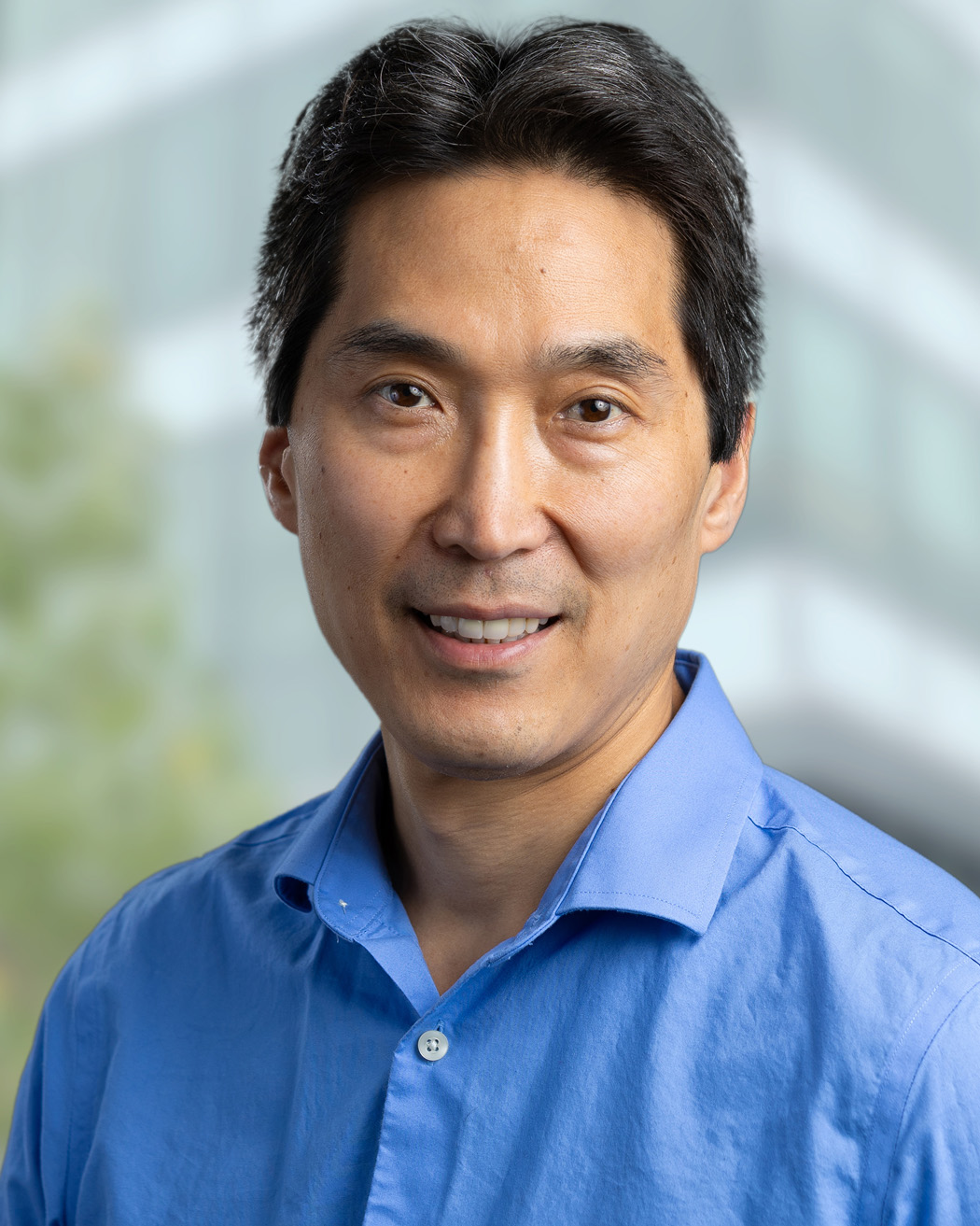
Nuclear theorists are using ML to study the structure and reactions of atomic nuclei, including those yet to be discovered at FRIB. One such FRIB theorist is Dean Lee, professor of physics at FRIB and in MSU’s Department of Physics and Astronomy and Theoretical Nuclear Science Department Head at FRIB, is a member of the organizing committee for the U.S. Genesis Mission.
The theorists are developing new techniques such as parametric matrix models (PMMs) to learn the equations that best reproduce scientific data. They are also using ML tools to accelerate difficult computations, simulate complex nuclear reactions, predict the properties of nuclei across the nuclear chart, and study correlations in nuclear wavefunctions and structure. These data-driven methods are helping FRIB scientists make faster and more accurate predictions about nuclei and nuclear astrophysics.
This work includes the renewed U.S. Department of Energy Office of Science Office of Nuclear Physics (DOE-SC NP) nuclear theory grant "STREAMLINE Collaboration: Machine Learning for Nuclear Many-Body Systems," led by FRIB and MSU in partnership with eight other institutions. The two-year renewal supports continued development of machine-learning–based emulators, model reduction methods, and data-driven approaches for studying complex nuclear many-body systems. Building on work supported by the DOE-SC Office of Nuclear Physics since 2023, the collaboration applies ML to improve predictions of nuclear structure and dynamics, including processes such as fission and fusion, while supporting collaboration and training across institutions.
Recent DOE-SC grant supports continued progress
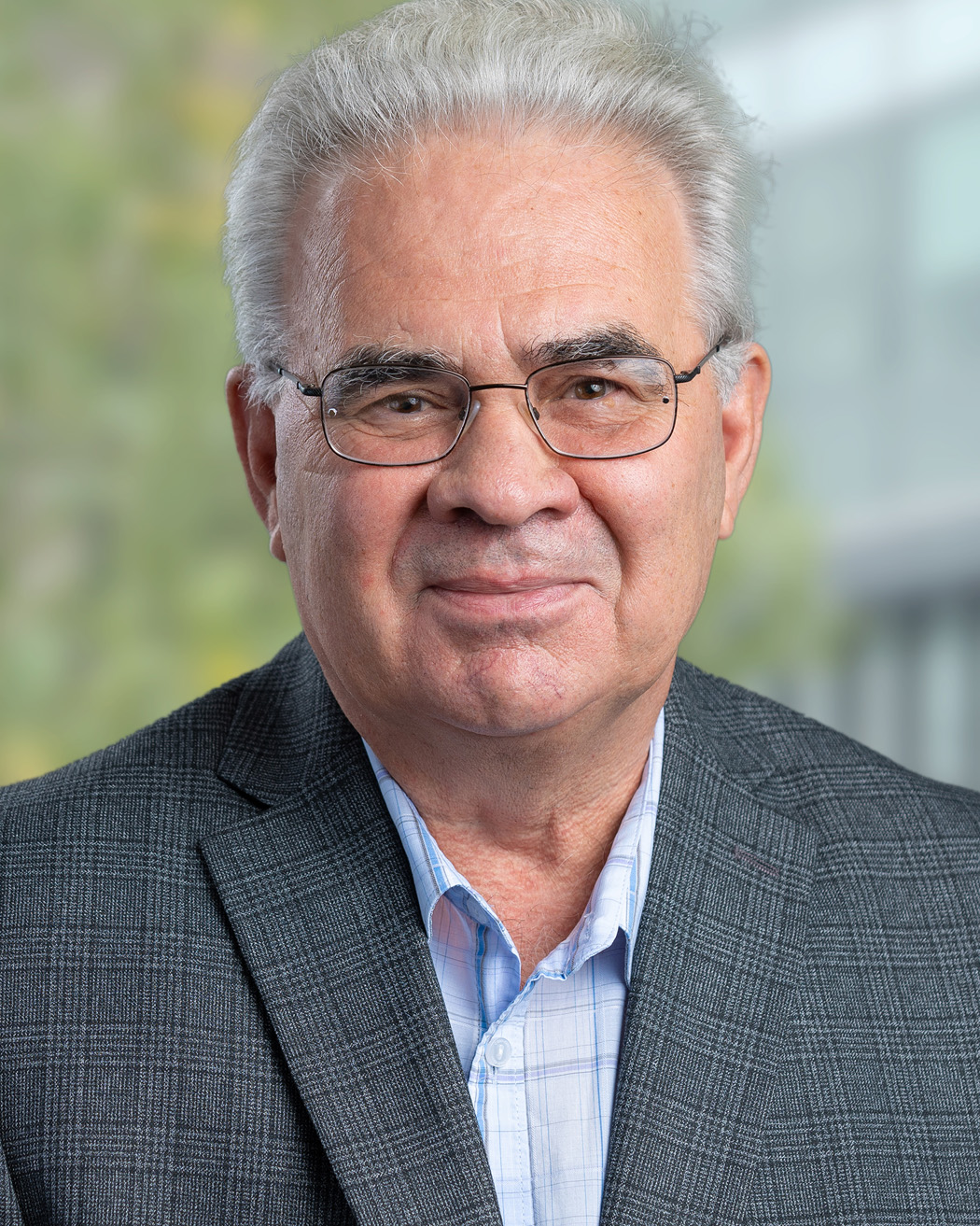
FRIB, in collaboration with Los Alamos National Laboratory, recently received a renewal grant from DOE-SC NP for the project "Online Autonomous Tuning of the FRIB Accelerator Using Machine Learning." Peter Ostroumov, professor of physics at FRIB and in MSU’s Department of Physics and Astronomy and associate director of the FRIB Accelerator Systems Division, is leading the grant.
Supported by DOE-SC’s grant, the two-year renewal grant provides funding for the use of ML to advance accelerator operational efficiency. This effort aligns with one of FRIB’s guiding paradigms—more time for science—by applying ML to FRIB’s beam-tuning process. The grant supports the creation of new ML tools that can be adapted for other accelerators. It also supports workforce development by training MSU undergraduate and graduate students and preparing the next generation of experts in AI and accelerator technology. The grant represents an important step toward strengthening FRIB’s capabilities and maintaining U.S. leadership in high-power/high-beam intensity heavy-ion accelerators.
AI and ML enable more efficient accelerator operations and more time for research
Running FRIB’s accelerator requires adjusting hundreds of parameters to deliver the right beam energy and intensity. AI and ML now help scientists with this complex task. Algorithms speed up beam tuning, reduce setup time, minimize losses, and stabilize conditions—improvements that translate directly into more time for experiments and higher availability for users.
FRIB researchers use ML methods such as neural networks and PMMs together with nonlinear beam dynamics to design autonomous ML systems that adjust accelerator settings. These efforts aim to improve beam performance and shorten setup time. By enhancing beam tuning and accelerator reproducibility, these tools contribute directly to FRIB’s mission of safe, efficient operations and to the success of its scientific user community.
Together, these advances form a progression: algorithms first support faster tuning, then refine beam control, and ultimately move toward self-optimizing accelerator systems. Each step contributes to a more reliable accelerator, improved beam quality, and greater experimental productivity.
NextGenDD workshop advances collaboration on detector and data-acquisition technology
FRIB continues to apply and refine AI and ML tools in partnership with national laboratories, universities, and users. These collaborations are laying the groundwork for new control systems and data-driven approaches that make operations more efficient and reliable. AI and ML are now integral to FRIB’s work, helping researchers interpret data, accelerate beam tuning, and dedicate more time to scientific discovery.
FRIB hosted the first New Generations of Detector and Data Acquisition Systems for Nuclear Physics(NextGenDD) workshop in 2025. Participants discussed the design, construction, development, and operation of new detectors and data acquisition systems for radioactive beam facilities and experimental setups. The workshop brought together experts to review recent achievements, upcoming upgrades, and new projects centered on technical collaborations between laboratories. Participants also examined how AI and ML can be integrated with intelligent signal processing to enhance event selection, real-time decision-making, particle identification, and data handling in high-rate nuclear physics experiments.
Michigan State University (MSU) operates the Facility for Rare Isotope Beams (FRIB) as a user facility for the U.S. Department of Energy Office of Science (DOE-SC), with financial support from and furthering the mission of the DOE-SC Office of Nuclear Physics. Hosting the most powerful heavy-ion accelerator, FRIB enables scientists to make discoveries about the properties of rare isotopes in order to better understand the physics of nuclei, nuclear astrophysics, fundamental interactions, and applications for society, including in medicine, homeland security, and industry. User facility operation is supported by the DOE-SC Office of Nuclear Physics as one of 28 DOE-SC user facilities.
The U.S. Department of Energy Office of Science is the single largest supporter of basic research in the physical sciences in the United States and is working to address some of today’s most pressing challenges. For more information, visit energy.gov/science.

